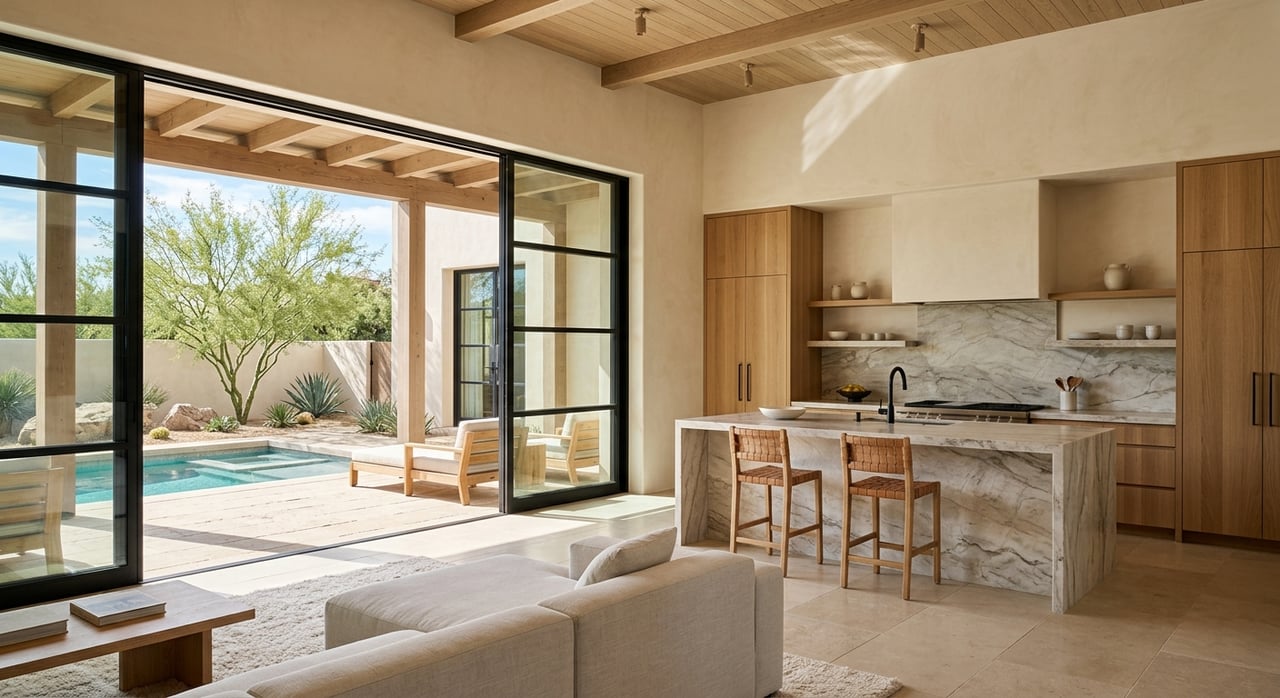
If you are getting ready to sell in Central Scottsdale, one thing matters more than many homeowners expect: smart preparation paired with precise pricing. This is a higher-value submarket where buyers still respond to quality and presentation, but they are also watching price closely. When you know what to fix, what to skip, and how to plan your launch, you can move forward with more confidence and less stress. Let’s dive in.
Know the Central Scottsdale market
Central Scottsdale is not a one-size-fits-all market. It is a mature Scottsdale submarket where neighborhood character, lot placement, condition, and setting can shape buyer response in a meaningful way.
In March 2026, Scottsdale’s median sale price was $965,000, homes sold in about 58 days, the sale-to-list ratio was 96.8%, and 37% of homes had price drops. In Maricopa County, April 2026 data showed 16,452 homes for sale, 72 days on market, and 4.2 months of supply. The practical takeaway is simple: buyers are active, but they are price-sensitive.
That means your prep plan should not focus only on making the home look better. It should also support a pricing strategy that fits today’s competition.
Start with pricing, not wishful thinking
One of the biggest mistakes sellers make is starting with the number they want to net and building the list price from there. In Central Scottsdale, a stronger approach is to start with the market and work backward.
Your list price should reflect the most similar recent sales, then account for your home’s visible condition, lot, pool, HOA, orientation, and micro-location. A home on a quieter interior street may compete differently than one near a busier corridor, even within the same general area.
It is also important not to assume every update returns dollar for dollar. In a market where price drops are common, overpricing can quickly reduce momentum and lead to more days on market.
Use comps the right way
A practical pricing framework looks like this:
- Review the most similar recent sales
- Compare current competition and local absorption
- Adjust for condition, timing, lot, and features
- Decide whether to list at, slightly under, or slightly above the strongest comp based on your urgency and the level of competition
This kind of pricing is especially important in Central Scottsdale, where buyers often compare homes carefully and notice value gaps quickly.
Plan your timeline months ahead
Good listing launches rarely happen at the last minute. Even if you hope to sell during a strong seasonal window, the real advantage comes from being fully prepared before your target date arrives.
National 2026 research pointed to mid-April as a strong selling window, but that does not mean every Central Scottsdale home should list then. It does mean you should begin prep well in advance so you can choose your launch timing with flexibility instead of rushing.
In Arizona, weather also plays a role. Monsoon season runs from June 15 through September 30, and Phoenix’s normal July 4 high is 107 degrees. If your home’s appeal includes a patio, pool, outdoor dining area, or desert landscaping, it often helps to complete exterior work and photography before peak summer heat.
A simple seller prep timeline
Here is a practical way to think about the process:
| Time Before Listing | Focus |
|---|---|
| 6 to 8 weeks | Pricing review, repair list, disclosure prep, HOA document collection |
| 4 to 6 weeks | Landscaping cleanup, paint touch-ups, fixture updates, decluttering |
| 2 to 3 weeks | Staging, deep cleaning, final exterior polish |
| 1 week | Photography, final walkthrough, launch planning |
Focus on visible improvements first
When sellers prepare a home, it is easy to think bigger is always better. In reality, the most effective updates are often the ones buyers notice right away.
Research on staging and outdoor features supports a simple strategy: improve curb appeal, refresh the most visible spaces, and help buyers picture daily life in the home. That usually means prioritizing low-friction improvements over broad remodeling.
For many Central Scottsdale homes, the best returns come from making the property feel clean, cared for, and easy to enjoy. Buyers tend to respond well to homes that feel bright, open, and move-in ready.
Improve curb appeal with desert-appropriate choices
Scottsdale planning guidance in the Shea Area and Cactus Corridor emphasizes neighborhood character, compatibility, buffering, and the natural desert setting in scenic areas. That does not mean you need a major redesign before selling. It does mean exterior choices should feel tidy, appropriate, and in harmony with the home’s setting.
A strong curb appeal checklist may include:
- Trim desert landscaping
- Clean walkways, driveways, and hardscape
- Repair irrigation issues
- Touch up worn exterior paint
- Replace visibly dated hardware or light fixtures
- Refresh entry details like the front door and house numbers
If your home is in an HOA, check the CC&Rs before making exterior changes. Arizona guidance notes that HOA rules may restrict landscaping and other visible features, so it is wise to confirm requirements before spending money.
Stage the rooms buyers notice most
Staging does not have to mean fully redesigning your home. Its main job is to help buyers understand the space quickly and picture how they might live there.
According to 2025 staging research, many buyers’ agents say staging makes it easier for buyers to visualize a property as a future home. The living room, primary bedroom, and dining room are among the most commonly staged spaces, which makes them smart priorities if you are keeping the prep budget focused.
In Central Scottsdale, where the built environment is generally more urban and dense than farther north, staging should help rooms feel open, bright, and easy to move through. Simple furniture layouts, neutral textiles, and fewer accessories often work better than heavy or highly personalized decor.
Keep interior updates simple
Before listing, consider this short interior checklist:
- Declutter surfaces and storage areas
- Remove overly personal decor
- Touch up scuffed paint and trim
- Replace dated cabinet hardware or light fixtures if they stand out
- Deep clean floors, windows, kitchens, and baths
- Use light, simple styling in the main living areas
These changes can help your photos look stronger and make in-person showings feel more polished.
Respect neighborhood context
In Central Scottsdale, location value often includes more than just square footage. Buyers may pay attention to how a home fits its surroundings, especially in areas shaped by scenic corridor guidance or established neighborhood plans.
The Shea Area Plan and the Cactus Corridor Area Plan both emphasize compatibility with existing development and preservation of neighborhood character. Scenic corridor policy also highlights preserving or restoring the natural desert setting and Sonoran Desert character.
For sellers, the takeaway is practical. If you are making pre-listing choices outside, focus on cleanup and presentation rather than dramatic changes. And because some city guidance is policy rather than ordinance, always confirm what your HOA rules or property-specific requirements may allow.
Gather paperwork early
A smoother sale often starts with better organization. In Arizona, sellers have a duty to disclose known material facts that materially affect value and are not readily observable, so it helps to start gathering documents well before the home goes live.
That may include your Seller’s Property Disclosure Statement, HOA documents, repair records, warranties, and permit history. When these materials are ready early, it becomes easier to answer buyer questions clearly and avoid delays once you are under contract.
This step also helps you spot issues while there is still time to address them. If a past repair needs an invoice, or an HOA document needs updating, you are better off knowing that before the listing is active.
Prepare for feedback and negotiation
Even a well-prepared home may not get every detail right on day one. In a market where the sale-to-list ratio is below 100% and price drops are fairly common, feedback matters.
If buyers consistently mention condition, layout, or pricing, those comments may signal an adjustment is needed. The goal is not to react emotionally. It is to read the market clearly and respond with a strategy that protects your position.
Sometimes the best move is a price correction. Other times it is better staging, stronger photos, or a small repair that removes buyer hesitation.
Selling well is about sequence
Preparing to sell a home in Central Scottsdale is not about doing everything. It is about doing the right things in the right order. Price with the market, improve what buyers notice first, respect neighborhood context, and get your paperwork in order early.
When those pieces come together, your sale is more likely to feel organized, competitive, and manageable from start to finish. If you want a calm, strategic plan for pricing, preparation, marketing, and negotiation, connect with Ragini Sejpal.
FAQs
What is the most important step when preparing to sell a home in Central Scottsdale?
- The most important step is setting a price based on similar recent sales, current competition, and your home’s condition rather than on your desired net proceeds.
When should you start preparing to sell a home in Central Scottsdale?
- It is smart to begin several weeks or even a few months before your target listing date so you have time for repairs, staging, paperwork, and scheduling photography.
Which home improvements matter most before listing a Central Scottsdale property?
- Visible improvements usually matter most, including curb appeal, landscaping cleanup, paint touch-ups, light fixture or hardware updates, decluttering, and staging key living spaces.
Do HOA rules matter when preparing a home for sale in Central Scottsdale?
- Yes. Arizona guidance notes that HOA documents and CC&Rs may restrict items like landscaping and other exterior features, so you should review those rules before making changes.
What paperwork should Arizona sellers gather before listing a home?
- Sellers should gather disclosure forms, HOA documents, repair records, warranties, and permit history early so the listing and contract process can move more smoothly.
How long are homes taking to sell in Scottsdale right now?
- March 2026 market data showed Scottsdale homes selling in about 58 days on average, which supports the need for thoughtful pricing and strong presentation.